 Creative Spaces Network
 Raising awareness about music therapy and providing greater access to its benefits is a key focus of Music Therapy Week 2026, running from 10 to 15 April throughout New Zealand.
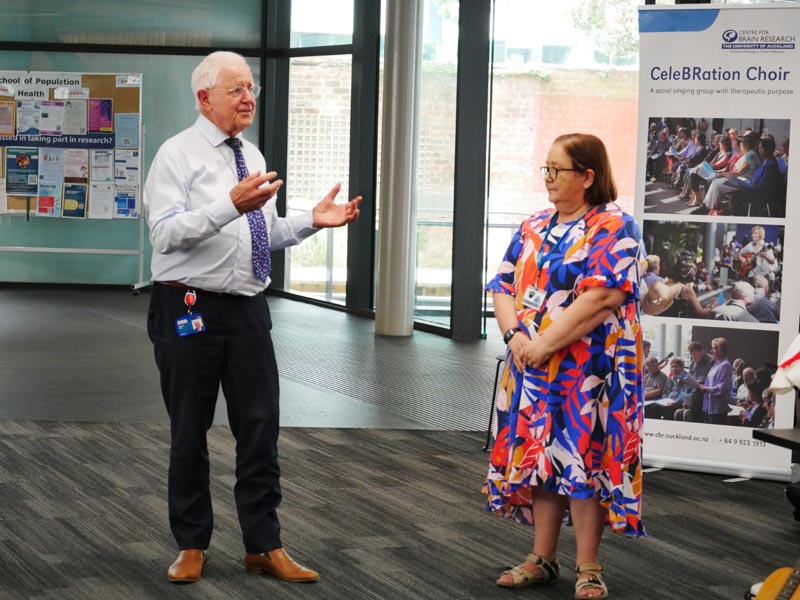
The theme of Music Therapy Week 2026 is Weaving Connections | Te Poutama Hononga. Enabling greater access to music therapy is crucial, says Auckland registered music therapist Alison Talmage.
 “Many people living in rural areas can’t access services,” Alison says. “Potential participants everywhere face mobility and financial barriers to participation. We need registered music therapists available everywhere and funding to increase equitable opportunities.”
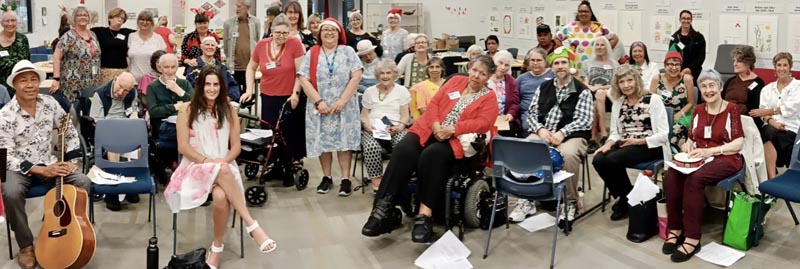
Fortunately, the CeleBRation Choir she leads is free, thanks to philanthropic funding and the support of recently retired Head of the Centre for Brain Research, Distinguished Professor Sir Richard Faull.
Alison has worked with clients with a wide range of needs, backgrounds and ages. She also leads Sing Up Rodney. Both of these Auckland groups are for adults living with post-stroke aphasia, Parkinson’s, traumatic brain injury or dementia.
Jenny Gordon, also a music therapist, shares this work, and the CeleBRation Choir is collaborating with music venue Kāhui St David’s.
Music therapy takes a flexible approach that centres participants’ goals and musical preferences, Alison says. It serves diverse communities and meets a range of different emotional, intellectual, physical and social needs for people of all ages.
Music an engaging medium
Music is an engaging medium for most people, and music therapy participants don't need previous musical training or experience.
 "Registered music therapists utilise a planned, intentional but flexible use of music to work towards the hopes, expectations and preferences of participants," Alison explains.
Alison recently completed her PhD at the University of Auckland School of Music and Centre for Brain Research, developing a handbook for choir facilitators.
“Singing brings people together and is a great medium for working towards communication goals,” Alison says. “Even so, many people need encouragement to give singing a go and to build their confidence.”
With funding from the University’s Centre for Co-Created Ageing Research, Alison is investigating music participation for older people in residential care. This project aims to capture conversations, hear about the value of access to music and find out what might be missing.
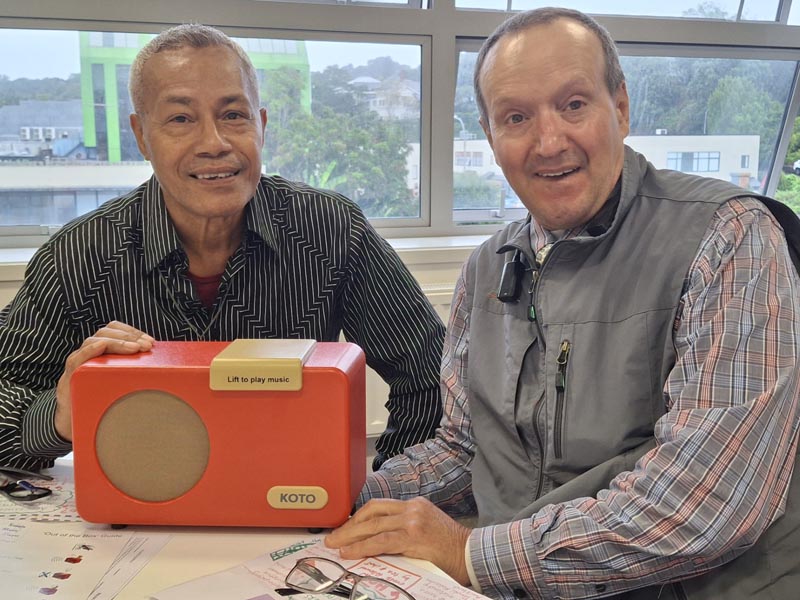
The CeleBRation Choir sings in care homes and always chat with residents afterwards over a cup of tea while her research group is also investigating the impact of listening to music, using the Simple Music Player.
Both rewarding and challenging
Music therapy is both a deeply rewarding and challenging line of work.
"The rewards are the smiles on participants’ faces and supporting them to join in, make new friends, and work at things they find difficult,” Alison says.
The choirs also welcome whānau and volunteers, and hosts practicums for music therapy and dance movement therapy students.
“But limited public awareness and lack of funding remain constant challenges,” Alison says. “Funding for people with disabilities or high health needs is precarious. For people ‘not in the know’, music therapy can seem like a frill rather than a valuable, evidence-based form of support.”
Raukatauri Music Therapy Centre
Also based in Auckland, Raukatauri Music Therapy Centre was founded in 2004 by singer/songwriter Dame Hinewehi Mohi. It now has centres and satellite locations in Northland, Bay of Plenty and the Hawke’s Bay, and works with approximately one thousand clients each week.
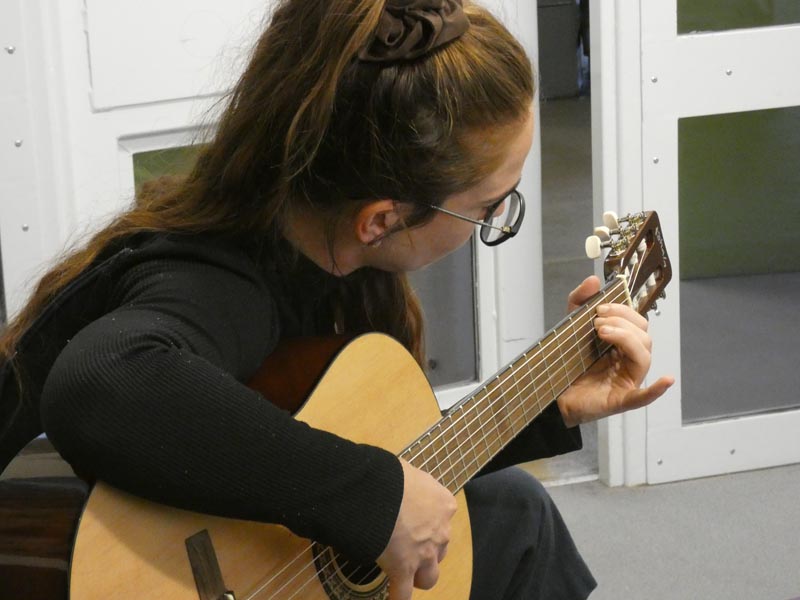 Ella Polczyk-Przybyla, a registered music therapist and manager of Raukatauri Music Therapy Centre’s Hawke’s Bay branch, works with men in Hawke’s Bay Regional Prison. She says the positive changes in the mood and wellbeing of the men participating in her sessions are significant.
"Music breaks down barriers and creates a common ground, allowing us to connect in meaningful ways. In the safety of a musical space, people are sometimes able to explore and express deep-seated traumas they might not discuss elsewhere.”
Read Ella's blog, The transformative power of music on the Arts Access Aotearoa website.
Fostering an environment for people of all backgrounds
Alison Talmage says that music therapy is an inclusive practice that fosters a supportive environment for people of all backgrounds. It also brings people together as participants often attend music therapy sessions with their partner, family members or friends.
She says this provides meaningful shared experiences at times when other daily activities may have become difficult.
"We’re always mindful of social and cultural needs such as bringing whānau to choir, sharing morning or afternoon tea, enabling singers to have a say in the repertoire, and ensuring we have permission to sing cultural songs," Alison says.
There is a general awareness that music is good for us emotionally, mentally and socially, Alison says, and music therapy raises specific awareness of why this is.
"As registered music therapists, our training teaches us to use all the elements of music to foster engagement, relationships and goal-oriented activities that align with participants' values.
“Music is enjoyable and connects us with our feelings, our bodies, our inner self and other people. Rather than using a single area of the brain, music connects many regions of the brain and connects our brains and bodies. It helps us move, use our voices, and manage our emotions and wellbeing.”
Music therapy is a small but steadily growing profession that deserves more recognition and awareness, Alison says. “Our vision is for music therapy to be accessible and affordable for everyone who might benefit, while also receiving greater recognition for our skilled work.”