 Creative Spaces Network
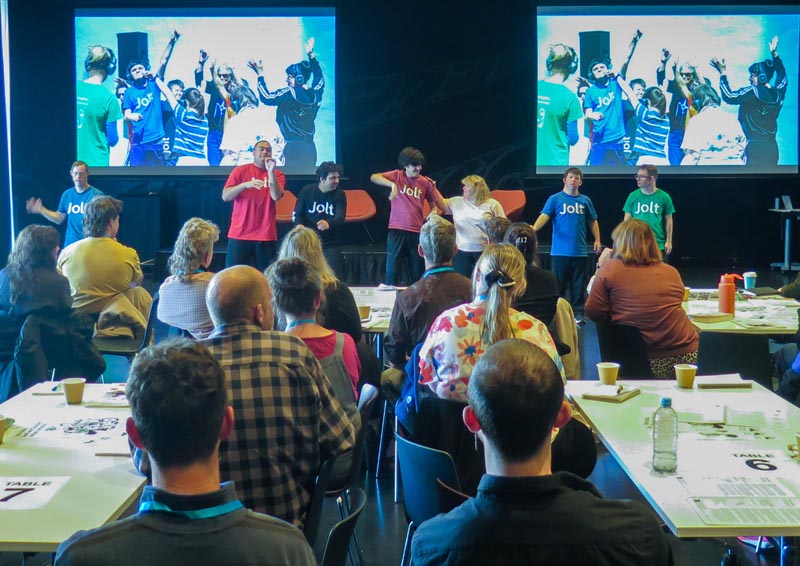
Creativity matters. We know this (we have the data to prove it) and at the Shifting the Stream forum in Christchurch we had the opportunity to feel it viscerally. When the incredible artists and leaders from Jolt stepped up to perform at the start of the hui, we didn't need any of that evidence base to understand what was happening: connection, confidence, joy – creativity.
 It's one thing to talk about the arts supporting wellbeing, another to watch it happen in real time.
The case for creativity and participation in the arts supporting mental health and wellbeing is well-established, both here in Aotearoa and internationally. And yet in the room, practitioner after practitioner described the same experience: tying themselves in knots, reshaping their story to meet funder needs. Securing enough to keep going and wrangling rich outcomes into reporting templates doesn’t feel like the best use of the incredible creativity within this sector.
So why is this such a widespread experience?
In her keynote, the legendary Dr Molly Mullen talked to three habits of thought that get in the way of funding creative wellbeing practices:
• mutually exclusive thinking, which reduces complex work to a single box and loses meaning in the process
• zero-sum thinking, which assumes one person's gain must be another's loss
• us-against-them thinking, which incentivises us to overstate how different or superior our own work is, further fuelling competition over collaboration.
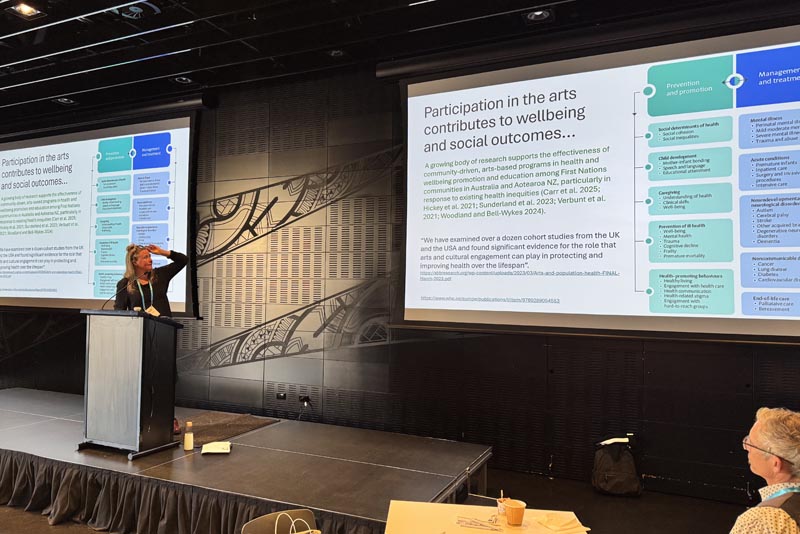 The alternative is what she calls both+and thinking: embracing what emerges when two or more things co-exist and intersect. This is the space of creativity and wellbeing, and it is exactly what makes it so powerful.
This framing resonated strongly with me because it’s also the space of innovation, which thrives in the friction of the in-between spaces where connections are made between different disciplines, sectors, professions, cultures and/or communities.
It’s exciting, full of opportunity, and it challenges some of the mindsets and processes that are deeply embedded in our institutions and systems. This can feel like an insurmountable barrier until an alternative channel emerges and things change: the stream shifts.
Resourcefulness is a survival skill
One of my strongest insights from Shifting the Stream was the realisation that creative practitioners, individually and as a group, are extraordinary at making something out of very little. This is an incredible skill and quality and should be acknowledged.
 At the same time, the danger is that it may be obscuring the true depths of the resourcing problem we are facing. This sector delivers an extraordinary return on what is actually a very small investment because practitioners are constantly applying a whole second skillset: stretching, adapting, making do, on top of their artistic and holistic practice.
That's heavy, exhausting work and it’s not a sustainable position to leave people in indefinitely, however good they are at it. It’s a wellbeing issue that echoes the huge and escalating pressures on our healthcare workforce.
Connecting the steams: the confluence
At Ember Innovations, we exist to change the way Aotearoa responds to mental wellbeing by creating the conditions for bold ideas to grow, communities to lead and systems to transform.
This often means working in the in-between spaces where both+and thinking and action are required. And wherever we start and whichever communities we partner with, creativity always has a core role to play.
Although there's a space for brand new solutions, often the most useful thing we can do is recognise what’s already working and remove some of the friction that gets in the way of those solutions reaching their true potential. It’s the unglamorous stuff that doesn't show up in a highlights reel but changes what's possible and what’s sustainable.
This hui brought together a room full of promise, potential and inspiration from the huge impact already achieved. Alongside the amazing creatives and the people working with them, I was inspired to see how many organisations were there to awhi and support, to try to find ways to remove roadblocks and amplify the brilliance already in play.
Arts Access Aotearoa is at the heart of this important work: a huge thanks for bringing the sector together for this kōrero and for all you do. We’re excited to explore what role we might play in shifting this stream together.
Emily Preston is Innovation Lead at Ember Innovations.