 Creative Spaces Network
Strong leadership is a vital ingredient in building and maintaining a productive, innovative and happy workplace. Arts Access Aotearoa asked creative space leaders their thoughts on good leadership and what it means to them. Paul McLellan-Smith, Cat Percy and Kim Morton, along with Andrew Michell (Coordinator Kaiwhakahaere at Vincents Art Workshop), are taking part in a panel discussion at the Toi Piringa - The Art of Connection symposium.
The panel discussion, facilitated by Arts Access Aotearoa, is one of the topics to be covered at the symposium, which is organised by Artsenta and will be held in Dunedin on Friday 14 October.
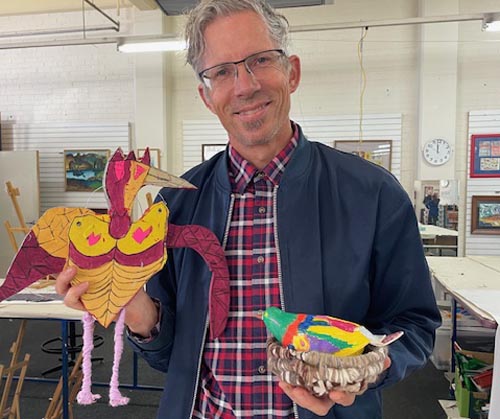
Paul McLellan-Smith, Director, Artsenta, Dunedin
Leadership has been an important learning journey for me. Before coming to Artsenta ten years ago, I'd spent most of my career working in the arts and in small organisations where you had to do a bit of everything. What was new at Artsenta was working with a more consistent team and within the health system.
 Working in a health context and delivering to government contracts brings a different perspective. Creativity and teamwork remain essential but they're supported by a much stronger focus on person-centred practice, cultural safety and trauma-informed approaches.
When I first arrived some of our staff, me included, hadn't had formal training in mental health practice. It was difficult finding training that suited our needs. There isn't really a training programme for creative spaces staff but I felt it was important that everyone had a shared understanding of what was considered best practice within a health environment.
Providing a safe environment has to come first. In a large creative workshop, where many people are coming and going throughout the day, that can sometimes be challenging. It requires everyone to have a shared understanding of our values, policies and the way we work together.
Over the past five years we've spent a great deal of time developing our kawa and tikanga. That's been one of the most significant areas of growth for the organisation. It has strengthened our culture, given staff greater confidence and helped create a more cohesive team.
For me, leadership is also about creating opportunities for others to lead. I've learned that rather than always being the person with the answers, my role is to support staff and artists to develop their own leadership and confidence.
That means letting go of some control, which isn't always easy. But organisations become stronger when leadership is shared and when people feel trusted to contribute their own ideas and strengths.
We have an outstanding team that works incredibly well together, and the feedback we receive from artists and participants continually reminds us why this work matters. That keeps us all motivated.
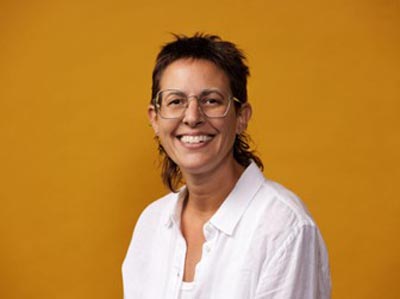
Cat Percy, Chief Executive Officer, Crescendo, Auckland
Good leadership isn't management, it's a way of being: bringing my whole self to the role and adapting how I lead to serve the kaupapa. I bring my values to everything I do at Crescendo and encourage my team to bring theirs, linked to our kawa. When someone misses a deadline, I lead with care and empathy – not hard ultimatums.
 Leadership isn't only about creating culture. It's about challenging others to see their own part in it too. Culture isn't handed down. It's built together and everyone has a hand in shaping it: safe, open and honest, where it's okay to disagree. It's tested most in how we support each other when things don't go our way.
A big part of the role is making hard calls and holding the stress myself so that it doesn't impact the team or our participants. I'm not managing people. I'm supporting, empowering and unblocking them, understanding what each person needs and can contribute, weaving it into something bigger than any one of us.
Leading by example matters and I won't ask my team to do anything I wouldn't do myself. I delegate rather than control, enabling each person to bring their own style and perspective.
Part of my job is navigating the waka towards our goals, saying no to what pulls us off course and yes to things people may not yet understand.
Leadership is also about forging a path so others can follow and leaving things better than I found them. It's picking my battles and helping the team prioritise because we can't do everything at once. It's a balance between steadying the waka in choppy waters and keeping our rudder agile enough to pivot at pace.
CEO is just a role that’s no more important than any other although it carries responsibility. I take the blame when things go wrong, not the praise when they go right.
I stay aware of the energy I bring into a room, and that I can't do this alone. I share power by asking: What do you think? What would you do?
Leadership isn’t just about strength. It's also about showing vulnerability: saying I need help, I don’t know but I’ll get back to you, knowing when to laugh, and being okay to cry when moved.
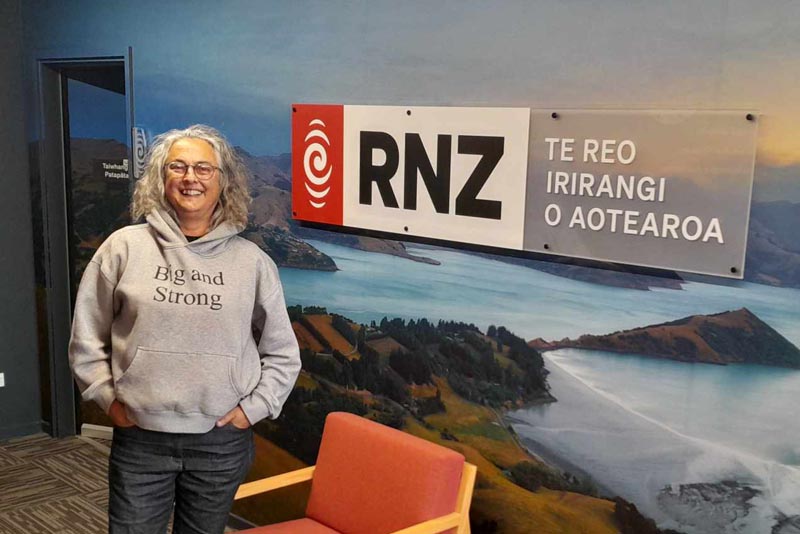
Kim Morton, Strategic Director, Ōtautahi Creative Spaces, Christchurch
Many of us come into leadership roles in the creative spaces sector without training or experience. We often land here through having a singular vision and an unwavering belief in the power of art, creativity, culture and ngā toi as a force for social change.
 For me, the opportunity for leadership arose from initiating a project to investigate the needs of people with mental distress and trauma following the earthquakes in Christchurch. It morphed into ten years leading Ōtautahi Creative Spaces and, over time, taking on a leadership role nationally advocating for arts and health.
Although we received a lot of encouragement from other creative spaces in the early days, in many ways we were making it up as we went along. We entered into a collaborative relationship with the participating artists and together, we shaped a creative community that catered for people’s experience of mental distress yet offered a world of possibilities and hope.
Leadership meant the courage to try things, take risks and learn from our mistakes.
Leadership within a sector that still feels emergent and is not well-known means I’ve needed to engage boldness and tenacity, both to enable our creative community to flourish and to make a case for long-term support for arts and health.
That’s probably been the most exciting aspect of leading in the last ten years – seeing the growth in curiosity about how the arts can be harnessed to tackle some of our intractable health challenges in Aotearoa.
I’ve brought a strategic approach, prioritising relationships with the health sector, building long-term partnerships with funders and building awareness of our impact through storytelling and research.
There’s work ahead to build our professional workforce and create opportunities for new leaders. At Ōtautahi Creative Spaces we’ve implemented a succession plan, with Henni Read moving into an operations manager role and me moving into a smaller role focusing on strategic relationships and sustainability.
Henni brings particular strengths in mentoring our small team. A really important initiative Henni has led is the creation of an artists’ programming group. This formalises artists’ influence on our art programme and our organisation, empowering our artists and centring their voices.